
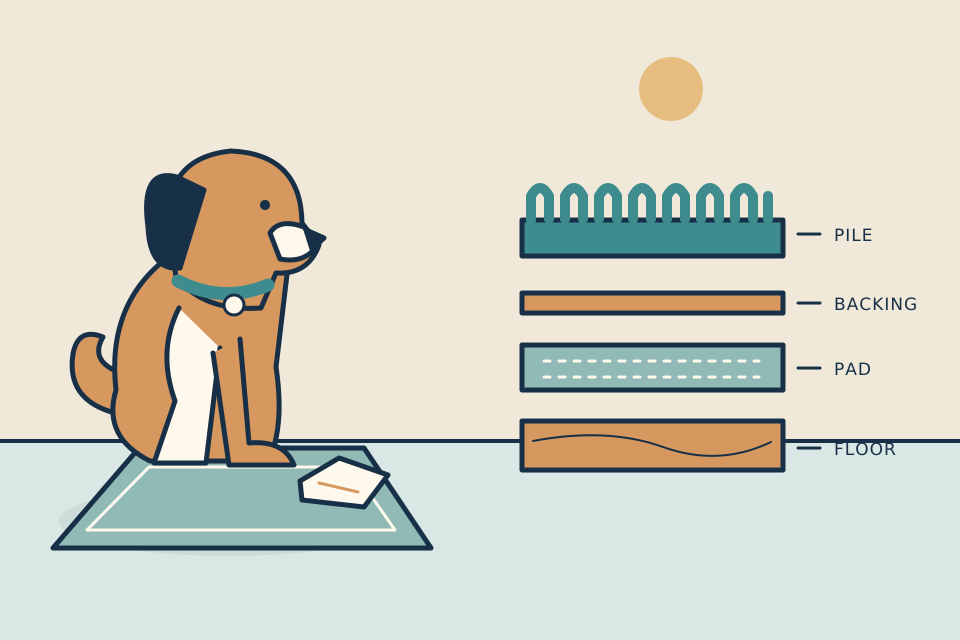
Blot fresh surface liquid, but do not assume that a smaller visible mark means every affected layer is clean.
General planning for a small pet-urine accident on household carpet. Feces, vomit, blood, sewage, extensive contamination, and suspected mold need separate advice. This is not veterinary guidance or a disinfection procedure.
Begin with controlled blotting
Keep foot traffic and pets away from the area while you deal with it. For fresh surface liquid, press plain white absorbent towels or a clean white cloth against the spot, then lift and replace them as they take up moisture. Avoid rubbing the liquid into a wider area.
The Carpet and Rug Institute’s care guidance recommends blotting rather than scrubbing and warns that printed towels can transfer color. Note where and when the accident happened. If you do not know how old it is, say so when asking for help instead of treating it as a fresh spill.
Consider the layers beneath the pile
Installed carpet can include the visible pile, backing, a separate cushion or pad, and the floor beneath. A visible surface spot does not tell you exactly which layers were reached. The CRI’s pet-urine bulletin explains that moisture can damage backing bonds and that some specially designed backings resist liquid reaching the pad or subfloor. Do not assume your installation has that protection.
A large, repeated, or deeply absorbed accident deserves an assessment of the affected layers. Ask whether the backing, pad, or underlying surface needs attention. Do not pull up installed carpet or flood the area trying to reach a hidden source yourself.
Choose a product by its directions, not its category
Check the carpet manufacturer’s instructions before adding a cleaner. Confirm the exact fiber and any treatment restrictions. For an allowed product, read the surface compatibility, test procedure, amount, application time, residue-removal steps, and drying precautions. CRI recommends a hidden-area test even for products in its approval program.
Enzyme-based treatments are among the options described in CRI’s urine bulletin. The word “enzyme” alone does not establish that a bottle suits every carpet, backing, rug, or floor. If the required application conflicts with the item’s restrictions, stop and ask for a compatible approach. Do not mix or layer treatments in search of a stronger result.
CRI advises against using a steam cleaner on urine spots. Avoid heat as an improvised rescue. If a professional proposes a cleaning process, ask what it actually involves; our methods guide distinguishes steam from liquid extraction.
Separate removing a deposit from reversing damage
Urine can change carpet dyes, so a remaining color difference is not always removable residue. The IICRC’s animal-stain guidance describes immediate and delayed changes and explains that aged damage may not be fully reversible. Repeatedly treating a discolored area can therefore be the wrong response.
Odor is another question. CRI notes that some products mask odor and that it may reappear in humid conditions. A fragrance is not proof that the source has been removed. Tell the cleaner if an odor returns after drying and ask about the affected materials rather than requesting more deodorizer by default.
Give loose rugs a separate decision
If the accident is on an area rug, do not automatically borrow an installed-carpet recipe. The rug’s dyes, foundation, pad, and floor all matter. The Association of Rug Care Specialists warns that some over-the-counter spotters can alter rug dyes and that home treatment can cause irreversible damage.
For a wool, silk, handmade, valuable, or unidentified rug, seek rug-specific advice before using a spotter. Provide the label and photos of both sides where safely accessible. A product described as a carpet cleaner is not automatically approved for a delicate rug.
Make an assessment more useful
Keep a simple record: location, approximate size, when you noticed it, whether accidents have recurred there, and every product already applied. Share the carpet or rug details and mention any persistent dampness, color change, or odor.
Ask which layers will be assessed, what treatment is proposed, how drying will be checked, and which outcomes remain uncertain. An honest explanation of limitations is more useful than a promise that every trace, stain, or smell will disappear.
Sources & scope
Carpet-industry and rug-specialist guidance checked November 9, 2026. The advice describes material risks and care decisions, not measured health outcomes. No stain, odor, disinfection, or full-restoration result is guaranteed.
- Carpet and Rug Institute: Cleaning and maintenance
- Carpet and Rug Institute: Pet urine and carpet technical bulletin Revised July 27, 2017.
- IICRC: Consumer floor and furnishings care information, Animal Stains and Odors PDF pages 18–19; publication date not stated.
- Association of Rug Care Specialists: Pet stains Copyright 2022.
General care information, not an assessment of your particular item.